
Subscribe to continue reading
Subscribe to get access to the rest of this post and other subscriber-only content.

Subscribe to get access to the rest of this post and other subscriber-only content.
I would very much have liked my most recent essay on saxophone ligatures to be my last. But after responding to many dozens of questions and messages, it is clear the topic remains deeply misunderstood. I do not blame anyone for that. I spent most of my own playing life misunderstanding the ligature’s role as well.
The confusion persists because ligatures are discussed in tonal language rather than mechanical language. Even technically minded players can struggle to separate what feels different from what is physically different. Over time, mythology accumulates around what is, at its core, a very simple device. So here is one final attempt to explain what a saxophone ligature actually does, as plainly as I can.
Spend five minutes on any saxophone forum and you will find debates about ligature materials, resonance, projection, dark versus bright models, and other claims that do not hold up under acoustical analysis. The reed and mouthpiece system is extremely sensitive. Small mechanical changes can produce noticeable differences in feel. Because the ligature is easy to swap and adjust, players naturally attribute every perceived change to it. But the ligature’s role is mechanical, not acoustical.
If you want to wear a wristwatch, you need a wristband. If you want to play the saxophone, you need a ligature.
If the wristband is too loose, the watch shifts or falls off. If the ligature is too loose, the reed shifts or leaks.
If the wristband is too tight, it digs into your wrist. If the ligature is too tight, it compresses the reed bark.
When the wristband is tensioned correctly, it simply holds the watch securely. When the ligature is tensioned correctly, it simply holds the reed securely.
The wristband does not keep time. The watch does. The ligature does not produce sound. The reed and mouthpiece system does. That distinction matters more than any debate about materials or design.
A ligature has one job. It secures the reed against the mouthpiece table with sufficient stability and minimal interference. It does not add resonance, enhance overtones, brighten the sound, darken the sound, or increase projection. Those qualities are governed by the reed, the mouthpiece geometry, the air column, and the player.
What the ligature does is establish a mechanical boundary condition. It determines how securely and evenly the reed is held. When that condition is stable, the reed vibrates as designed. When it is unstable, too loose, unevenly clamped, or excessively compressed, performance suffers. Everything players describe as response, resistance, clarity, focus, or spread arises from how the reed behaves under those mechanical conditions, not from any acoustic property of the ligature itself.
It is worth noting that unusual material configurations, such as a wooden reed plate, can produce real proprioceptive feedback through the instrument, a sensation the player feels rather than a tonal effect the listener hears. That distinction matters. Mechanical feedback and acoustic contribution are not the same thing.
The reed system is exquisitely sensitive. Tiny adjustments can feel dramatic. The ligature is the most accessible part of the setup to change, so it becomes the perceived cause of every difference. For years I resisted this explanation myself. Many players still do. But once the ligature is understood as a fastener, necessary, adjustable, and not a sound producing component, the mystery disappears and the important variables come into focus.
Stop chasing ligature mythology. The ligature is not where tone lives. Tone lives in the reed, the mouthpiece, the air column, and the player. The ligature’s only job is to hold the reed still long enough for all of that to happen. When it does that job well, you will not think about it. That is exactly how it should be.
For the full mechanical and technical argument, including boundary conditions, pressure distribution, and why identical ligatures can feel different in different positions, read: You Don’t Play a Ligature.
For the complete acoustical and psychophysical treatment, including a review of controlled research, read: The Ligature Question: Mechanical Function vs. Psychophysical Perception.
For our published clarinet ligature trial, including results on proprioceptive feedback from an unusual material configuration, read: Clarinet Ligature Trial: What We Found.
A comprehensive list of all Jazzocrat essays can be found here.
In saxophone and clarinet circles it has become common to hear players say they “play” a ligature, or that a particular ligature “adds” resonance, projection, or tonal complexity. This language is understandable. Musicians often reach for metaphor when describing subtle sensations. But it is also misleading, because in functional terms a woodwind player does not play a ligature. One plays a mouthpiece and reed. The ligature’s job is to secure the reed with enough stability for the vibrating system to operate as intended. When we misidentify what a ligature does, we also misidentify why different designs can feel different in use.
From an acoustical standpoint, the sound producing system consists of three elements: the reed, which vibrates; the mouthpiece, which defines the reed’s operating conditions; and the air column, which determines pitch and resonance. The ligature contributes none of these. It does not vibrate in any meaningful way, and it does not resonate in a way that materially affects the sound. Its function is mechanical. The ligature holds the reed against the mouthpiece table. Any perceived influence must therefore arise from how the ligature constrains the reed, and not from any intrinsic acoustic property of the ligature itself.
The boundary conditions of a reed describe which parts are free to move and which are held fixed. The tip is free to vibrate. The bark is pressed against the mouthpiece table and does not participate in the oscillation that drives the air column. The ligature’s role is not to create sound. It defines how firmly and evenly the reed is held against the table. Small differences in pressure distribution can change how consistently the reed seats, especially given natural reed variability, table imperfections, and moisture. This affects response and feel without altering the acoustics of sound production itself.
Ligature designs can be grouped by how they constrain the reed. Some apply enough vertical pressure to seat the reed securely without heavy compression. Others, such as traditional two screw ligatures, apply firmer compression that presses the reed more completely against the table. Neither approach is inherently superior. They simply establish different mechanical boundary conditions. In both cases the ligature remains passive. The reed vibrates, and the ligature restrains.
The reed and mouthpiece operate on distinct functional axes. The reed’s primary working length runs from tip to heel. The vamp is thin and flexible. The bark is comparatively rigid. Vibration occurs at the tip, but sealing occurs along the table, and sealing depends on how normal force is distributed along that table.
Because the bark is essentially uniform in thickness and stiffness, ligature effects do not arise from clamping progressively stiffer portions of the reed or from bending the bark. Instead, changing ligature position alters how normal force enters the reed to table interface, which changes the distribution of contact pressure.
Even when total clamping force is identical, shifting where that force is applied changes how the reed conforms to small table irregularities, how consistently it returns to that position, and how tolerant the setup is of minor warp or moisture related deformation. The ligature itself remains passive. What changes is the boundary condition it imposes on the reed to table interface, and therefore the stability of that interface.
Because pressure distribution alters the reed’s boundary condition, players may experience differences in response, stability, or resistance. These sensations are real, but they do not imply that the ligature itself produces sound, adds harmonics, or contributes resonance. The mechanism is indirect and mechanical, arising entirely from how pressure is distributed, how the reed material flexes, and how consistently the reed is seated.
This explains why two ligatures of similar mass can feel different, and why identical ligatures can behave differently when moved slightly forward or back. It also explains why marketing language drifts into metaphor. The real mechanism is subtle, unglamorous, and rooted in geometry and mechanics.
To say that a player “plays” a ligature is a category error. A ligature has no musical agency. What it does have is mechanical influence over how the reed is constrained and how it seals to the table. Ligatures differ not in tone production but in how they define the reed’s boundary conditions. Once that distinction is made, much of the confusion and mythology around ligatures evaporates.
For a more accessible version of this argument, written for players who want the plain language explanation without the mechanical detail, read: One Last Essay on Saxophone Ligatures (I Hope).
For the full acoustical and psychophysical treatment, including a review of what controlled research actually supports, read: The Ligature Question: Mechanical Function vs. Psychophysical Perception.
A complete list of all Jazzocrat essays can be found here.

In a recent essay, I wrote about absence. Specifically, I addressed how institutional contraction and shifting priorities altered the lived experience of woodwind artists within D’Addario’s artist community. Writing that piece made something else unavoidable. If absence leaves an imprint in a lineage driven musical culture, then presence must as well. This essay examines what sustained institutional presence looks like in the woodwind world by turning to a company whose identity has long been inseparable from reeds, mouthpieces, and clarinet and saxophone culture: Vandoren.
This is not a celebration of one brand over another. It is an examination of how organizational structure, cultural focus, and artist engagement shape the experience of professional musicians. Clarinetists and saxophonists rely on these companies not only for products, but for continuity, visibility, and a sense of belonging within woodwind culture.
Unlike D’Addario, whose portfolios span guitar strings, orchestral strings, percussion, and accessories, Vandoren has remained almost singularly focused on woodwinds. Reeds, mouthpieces, ligatures, and woodwind accessories are not a division of the company. They are the company.
This structural distinction matters. It shapes priorities, messaging, and the way saxophonists and clarinetists experience the company’s presence in their professional lives. When a musician encounters Vandoren, whether through its artist roster, educational outreach, advisory studios, or public communications, the message is consistent. Woodwinds are central, not peripheral. That perception, whether fully accurate or not, carries real weight. In lineage based musical cultures, perception influences loyalty, identity, and trust.
This singular focus is not only strategic but historical. Vandoren’s identity has been intertwined with woodwinds for nearly a century, and that continuity shapes how musicians interpret the company’s role in the culture.
One of the most striking contrasts between Vandoren and other large music industry companies is the stability of Vandoren’s artist community. While turnover exists in every organization, Vandoren’s roster of saxophonists and clarinetists has remained notably consistent across decades. Many artists maintain long term relationships with the brand that span the majority of their professional careers.
This stability is not accidental. It reflects a culture of attentiveness, continuity, and relationship building that is visible in the way Vandoren structures its artist ecosystem. The company maintains a large, curated international roster, distinguishes between performers and clinicians, and sustains relationships that often extend beyond a single career phase.
In conversations with Vandoren aligned musicians, a recurring theme emerges. They feel seen, supported, and understood. The relationship is described not as transactional but as rooted in shared identity and long term mutual investment. Whether or not this perception reflects every internal reality is ultimately less important than the fact that it is so widely and consistently expressed. In woodwind culture, perception is not superficial. It is part of the lineage.
Vandoren’s presence in the woodwind world is not defined by dramatic marketing campaigns or frequent product launches. Instead, it is defined by consistency.
That consistency is reinforced through visible, structural commitments. Vandoren maintains permanent musician advisory studios in major cultural centers such as Paris, New York, and Tokyo. These studios provide a physical space where saxophonists and clarinetists can test equipment, consult with specialists, and interact with the company outside a purely commercial context. They function less as retail environments than as points of continuity.
In addition, Vandoren maintains a steady presence at conferences, competitions, and educational events. The company’s engagement with teachers, students, and professionals reinforces the sense that woodwinds are not one market segment among many, but the core of its institutional identity.
In a musical culture where mentorship, lineage, and continuity matter deeply, this kind of steady presence functions as a form of support in itself. Reliability becomes a signal of care.
Public information about Vandoren’s artist benefits is limited, as is typical across the music industry. Endorsement tiers, compensation structures, and discount policies are not publicly disclosed. However, certain forms of artist support are visible through the company’s programs and outreach.
Vandoren operates initiatives such as its Emerging Artist Competition, which provides young saxophonists and clarinetists with product support, performance opportunities, and international exposure. The company also sustains a structured clinician program and invests heavily in educational outreach, frequently providing artists and materials to institutions at little or no cost.
While the specifics of individual arrangements remain private, the durability of these programs and the long term loyalty of artists suggest that musicians experience Vandoren’s support as relational rather than episodic. In a culture where trust is built through sustained presence, these forms of engagement often matter more than clearly defined benefit packages.
D’Addario’s recent experience illustrates the challenges of maintaining artist relationships across multiple product categories. Vandoren represents the opposite case, the advantages of singular institutional focus. This does not make Vandoren flawless. It makes the company consistent.
Vandoren’s identity is not divided among competing musical markets, and its messaging does not shift with short term trends. Its woodwind artist community is not one constituency among many. For better or worse, Vandoren’s world is the woodwind world, and musicians feel that alignment.
As a saxophonist and clarinetist, I have spent my life in a musical culture where lineage matters. The reeds and mouthpieces one’s teacher plays, and the companies that support their favorite artists, can shape how one understands their place in this tradition.
Vandoren’s strength is not simply the quality of its products. It is the company’s sustained presence. In a lineage driven culture, presence becomes a form of stewardship. It signals care, identity, and understanding of the world the company serves.
This essay is not a verdict on Vandoren any more than a previous essay was a verdict on D’Addario. It is an attempt to describe how two companies, similar in scale but different in structure, shape the lived experience of the musicians who rely on them. Woodwind culture has a long memory. It remembers absence. It also remembers presence, and Vandoren has been present for a very long time.
For related reading on artist relations, manufacturing transparency, and institutional presence in the woodwind industry:
For the companion essay on absence and its cost in artist relations, read: D’Addario Woodwinds, Artist Relations, and the Cost of Absence.
For the broader argument about transparency and trust in saxophone manufacturing, read: Trust, Transparency, and the Modern Saxophone Market.
A complete list of all Jazzocrat essays can be found here.
In the world of saxophone accessories, few concepts carry more weight than craftsmanship, authenticity, and handmade design. These values resonate deeply with players who care about tone, materials, and lineage. That is why the promotional video for the BetterSax Burnin Ligature, featuring renowned maker Peter Jessen, warrants careful attention.
The video opens with a compelling hook. The viewer is told they are about to see how the great saxophone maker Peter Jessen builds a minimalist ligature from scratch, and that everything in this process is as analog and old school as it gets. The imagery is intimate and artisanal, showing Jessen hand hammering the beginnings of a ligature in his Copenhagen workshop. It is a powerful aesthetic, and it reflects a boutique, hand built ligature made with traditional methods.
But the crucial distinction between a handmade prototype and a mass produced retail product is never clarified. This is where implication becomes the message.
Jay Metcalf never explicitly claims that the retail BetterSax ligature is hand hammered by Jessen, made in Denmark, or produced using the analog methods shown on screen. Instead, the video places artisanal craft adjacent to the commercial product.
This creates what I am calling prevarication by proximity. The craft is real. The maker is real. The process is real. But the viewer is encouraged, through sequencing, framing, and omission, to assume the retail ligature shares this origin story. This is not deception by falsehood. It is deception by implication, which is a softer but equally effective form of narrative shaping.
The BetterSax Burnin Ligature retails for around $70 and is distributed through large scale platforms including Amazon. At that price point, certain realities become unavoidable. A ligature sold at this scale is very unlikely to be individually hand hammered, produced in a Copenhagen workshop, or fabricated using labor intensive analog methods.
This is not a criticism. It is simple economics. True boutique ligatures, made one at a time by independent craftsmen, cost several multiples more. Labor has a price, and artisanal production has a ceiling.
The issue is not that the BetterSax ligature is mass produced. The issue is that the marketing narrative leans heavily on craft imagery while selling what appears, based on its price point and distribution scale, to be an industrially manufactured product. The video does not disclose where the production ligatures are made or how they are produced, so this inference is based on economic reasoning rather than confirmed manufacturing information.
Terms like analog, old school, minimalist, and hand built function here as aesthetic signals, not technical descriptions. They evoke authenticity, tradition, lineage, and boutique craftsmanship. These are powerful triggers in the jazz community, where gear identity often carries emotional weight.
The retail ligature appears to be a standard brass, double screw design with gold plating, most likely manufactured using modern production methods, though the video provides no confirmed information about the manufacturing process. There is nothing wrong with that. Many excellent ligatures are made this way. It becomes problematic when the language of craft is allowed to stand in for factual clarity.
The video never states where the production ligatures are manufactured, how they are produced, or what role Peter Jessen plays beyond initial prototyping. That omission shapes the viewer’s perception as deliberately as any explicit claim would.
Saxophonists care deeply about materials, process, and provenance. Many have learned, sometimes at significant cost, the difference between genuine boutique craftsmanship and mass produced accessories wrapped in boutique language. When marketing blurs that line, it erodes trust not only in a single product but in the broader discourse around saxophone gear.
Jay Metcalf has not lied. He has allowed viewers to draw conclusions he does not correct. That is the essence of prevarication: truthful statements arranged to guide perception toward an unspoken assumption.
A transparent version of this story could be both accurate and appealing. Something like: this ligature was designed with input from Peter Jessen, based on handmade prototypes developed in his Copenhagen studio, and is now manufactured at scale to make the design accessible to a wider audience.
That framing honors the maker, respects the craft, and acknowledges the realities of production. It does not borrow artisanal authority to sell an industrial product.
In a market increasingly saturated with boutique language, transparency is a competitive advantage. Saxophonists value honesty as much as they value tone. When companies rely on implication instead of clarity, they risk undermining the trust that musicians place in their gear and in the people who recommend it.
The BetterSax ligature may be a perfectly fine mass produced accessory. But the marketing surrounding it deserves the same scrutiny we apply to any claim of craftsmanship.
The promotional video referenced in this essay can be viewed here.
This assessment reflects my personal opinion based on publicly available information and independent analysis. It is not a legal accusation.
For related reading on marketing claims, acoustic evidence, and the ligature’s actual mechanical function:
For the full acoustic and psychophysical treatment of what ligatures actually do, read: The Ligature Question: Mechanical Function vs. Psychophysical Perception.
For a broader survey of pseudoscientific and misleading marketing across the saxophone accessory industry, read: The Saxophone Industry’s Pseudoscience Problem.
For an examination of how marketing exploits historical legacy and player identity, read: When Marketing Rewrites History: The Problem With Using Legendary Players to Sell Mouthpieces.
A complete list of all Jazzocrat essays can be found here.
Subscribe to get access to the rest of this post and other subscriber-only content.
For many woodwind players, D’Addario occupies a complicated position within the saxophone and clarinet world. The company produces reeds, mouthpieces, and accessories that are widely respected and deeply embedded in professional and educational use. At the same time, a growing number of players have sensed a quiet distancing of woodwinds from D’Addario’s public identity and artist facing presence.
This essay is not about product quality. It is about artist relations, visibility, and cultural stewardship in the woodwind community.
Over the past several years, a number of highly influential saxophonists including Jerry Bergonzi, Chris Potter, Bill Pierce, Melissa Aldana, Jeff Coffin, and Timothy McAllister have departed D’Addario’s woodwind artist roster. These musicians span genres, generations, and professional contexts. Taken together, their departures represent not a stylistic shift but the loss of a significant cross section of modern saxophone authority.
For woodwind players, artist rosters are not cosmetic. They signal lineage, pedagogy, and trust.
A pattern consistently reported by former artists and observers of the woodwind community points to a consistent theme. The decisions of departing artists were not driven by dissatisfaction with reeds, mouthpieces, or manufacturing quality. Rather, former artists have described a period marked by diminished communication, inconsistent support, and a growing sense that their presence as artists was no longer meaningfully engaged. The word that appears most often in these accounts is not conflict but absence.
This perception is reinforced by how woodwinds appear within D’Addario’s broader branding. When navigating the company’s website and marketing materials, woodwinds often feel secondary to other product categories with greater visibility. In a lineage driven culture like woodwinds, where authority is built through pedagogy, mentorship, and long term presence, visibility is not cosmetic. It signals value.
Before finalizing this essay, I offered D’Addario an opportunity to respond. The company provided a detailed, candid, and substantive reply that materially informs this discussion.
D’Addario acknowledged that over the past five years there were periods when it was unable to support woodwind artists in the way they deserved or had come to expect. The company cited a convergence of extraordinary challenges including the COVID-19 pandemic, significant organizational contraction, reduced personnel, limited marketing resources, and the relocation of its entire Woodwinds manufacturing operation from Los Angeles to New York. During this period, focus necessarily narrowed toward sustaining manufacturing continuity and product integrity, which resulted in a real and acknowledged cost to artist relationships.
Importantly, D’Addario did not dispute the experiences reported by departing artists. The company affirmed that feelings of being unsupported or unseen were real, justified, and deeply felt internally. Rather than minimizing these departures, D’Addario characterized them as a loss that shaped a re-evaluation of its artist engagement strategy.
According to the company, the past two years have marked a period of rebuilding. D’Addario reports having reestablished a dedicated global artist relations team for woodwinds, restored artist support budgets to pre-pandemic levels, reinvested in community driven woodwind initiatives, and increased visibility through woodwind focused social media and education outreach.
D’Addario also acknowledged the structural challenges of operating within a large, multi category organization, where woodwinds compete internally for shared resources, while expressing a renewed commitment to elevating the category within the broader brand.
Institutions, even large ones, are ultimately composed of people. Decisions are made under pressure, resources contract, priorities narrow, and unintended consequences follow.
D’Addario’s response reflects an awareness of this reality. It is not an excuse. It is context. Their willingness to speak openly about where support fell short, and to describe the internal constraints that contributed to that outcome, does not erase the impact on artists. It does, however, create space for a more honest conversation about accountability, repair, and what sustained presence requires in a lineage driven musical culture.
I want to be clear about my perspective. I am a long time and enthusiastic player of D’Addario’s reeds and mouthpieces. I play them by choice, rely on them daily, and have recommended them for decades.
The concerns raised here are not about sound, cane quality, or consistency. They are about presence. In woodwind culture, support is experienced less through campaigns than through sustained human engagement. When presence recedes, its absence can be felt immediately and personally.
D’Addario’s response matters because it demonstrates something musicians value deeply: a willingness to listen and acknowledge mistakes. That candor is not common in this industry, and it deserves recognition. While it does not undo what was lost, it does create the conditions for repair.
As a woodwind player, I do not expect perfection from the companies whose products I play. I do appreciate attentiveness to the musicians who carry the tradition forward. Rebuilding trust in the woodwind community will not happen through statements alone but through consistency over time.
This essay is not a verdict. It is an attempt to describe a moment honestly from within the community it affects. I remain a supporter of D’Addario’s work and am genuinely interested in seeing how its renewed commitments translate into lived experience for artists and players alike. Woodwind culture has a long memory, but it also recognizes good faith effort when it sees it.
For related reading on manufacturing transparency, artist relations, and institutional presence in the woodwind industry:
For the companion essay on sustained institutional presence, read: Vandoren, Artist Loyalty, and its Singular Woodwind Focus.
For the broader argument about transparency and trust in saxophone manufacturing, read: Trust, Transparency, and the Modern Saxophone Market.
A complete list of all Jazzocrat essays can be found here.
For the last several decades, buying from Dave at Kessler & Sons Music has mattered more to me than price. That statement is not a dismissal of value because Dave is not ever more expensive than the largest, most competitive dealers and is often less. It is rather an acknowledgment that price alone is a shallow metric for evaluating a musical purchase. When you order from Dave, you are not simply buying an instrument. You are buying confidence, consistency, and a level of professional care that has become increasingly rare.
Purchasing from Kessler & Sons is satisfying on multiple levels, beginning with customer service. Dave offers what is quite simply the finest customer service experience imaginable. The personalized attention he provides is not a marketing slogan or a transactional courtesy; it is the real thing. He listens, he remembers, and he understands musicians and their needs at a level that can only come from decades of immersion in the craft. If “customer service” had a dictionary definition, Dave would be it.
Equally important is what Dave does not sell. Kessler & Sons does not traffic in questionable, poorly designed, or marginally acceptable products. If something is available at Kessler, it has already been vetted. It has passed a real-world test of quality, reliability, and musical usefulness. The result is that customers never have to wonder whether they are gambling on a purchase. The inventory itself reflects discernment and integrity.
Perhaps the most tangible difference, however, reveals itself the moment an instrument arrives. Ordering from Dave means you do not need to immediately budget an additional $500 to have the instrument made playable at a boutique repair shop. Instruments from Kessler arrive double-boxed, meticulously packed, and professionally set up in-house. The care taken in shipping alone borders on legendary (enough packing peanuts to last a lifetime). But the real value lies inside the case.
Every instrument is prepared by an exceptional repair team whose setup, maintenance, and adjustment work stands comfortably alongside the finest boutique shops in Boston, New York, Chicago, or even Cedar Rapids, Iowa. The instrument arrives ready to play and not merely “new in box.” That distinction matters enormously to serious musicians.
The experience of ordering from Dave is itself worth describing. It does not begin with a cart and end with a confirmation email. It begins with a conversation. Whether you are considering a clarinet or a professional tenor saxophone, Dave engages with the question seriously, offers perspective grounded in real musical knowledge, and never rushes toward a transaction. That quality of engagement is what distinguishes him from every large online retailer in the instrument business.
The contrast with big-box online dealers is not subtle. Those platforms compete on price and speed, and they deliver on both. What they cannot deliver is accountability. An instrument purchased from a volume dealer arrives factory-fresh, which often means factory-imperfect, with setup work left to the buyer. The assumption is that you will either accept it as-is or absorb the cost of having it made right. Dave operates on a different assumption entirely: that the instrument should be right when it leaves his shop.
My own purchases from Dave reflect the full range of what Kessler & Sons carries. I have bought a Yamaha YCL-CSVR Custom Clarinet, a Yamaha YTS-875EX Custom Tenor Saxophone, a Selmer Paris Supreme Tenor Saxophone, and a Selmer Paris Muse Clarinet through him. Each purchase involved real guidance. Dave knew the instruments, understood what I was looking for, and helped me make decisions I have not second-guessed. That record, across instruments at this level of investment, says everything.
In a world increasingly dominated by anonymous online transactions and race-to-the-bottom pricing, buying from Dave at Kessler & Sons is a reminder of how good this process can be. It is not just a purchase; it is a relationship built on trust, expertise, and an unwavering commitment to doing things the right way. And that, ultimately, is why buying from Dave has always been worth more than price alone.
Thank you for reading this post. The Kessler & Sons website can be viewed by clicking here.
If you enjoyed reading about the outstanding customer service provided by Kessler & Sons Music, you may also like reading about:
The Boston Sax Shop Repair Shop
A complete list of all Jazzocrat essays can be found here.
Most saxophonists describe mouthpieces using terms like “free blowing,” “resistant,” “spread,” “focused,” “easy up top,” or “lush down low.” These descriptions are neither imaginary nor merely matters of taste. Instead, they reflect real physical sensations that arise from how a mouthpiece is built.
At the most basic level, a mouthpiece determines how hard the reed has to work and, just as importantly, where that effort shows up on the instrument.
Some mouthpieces feel like they push back. They give players something solid to blow against. As a result, notes snap into place, pitch feels locked in, and the upper register responds quickly. These mouthpieces often feel powerful and direct. However, they may also require more deliberate control in the low register and during subtone.
By contrast, some mouthpieces seem to disappear beneath the player. The sound opens readily, the low register blooms, and subtone speaks with minimal effort. These designs often feel expressive and forgiving, though they may require greater precision to keep the upper register centered and stable.
Neither approach is “better.” Rather, each design encourages different playing behaviors.
Picture a car’s suspension. Tighten it, and you may gain accuracy and stability. Loosen it, and you may gain comfort and freedom of movement. But no setup can sit at both ends of the spectrum without compromise.
Mouthpieces work the same way. Their internal geometry quietly determines how easily the reed vibrates, how stable notes feel, where the sound feels locked in, and which registers feel effortless and which demand finesse.
Once players recognize this relationship, mouthpieces stop feeling mysterious. Instead, they start feeling intentional.
All of these player sensations, resistance, openness, stability, and spread, originate from a single interaction: how the vibrating reed couples to the air inside the mouthpiece. In acoustics, this interaction is called acoustic impedance.
Fortunately, understanding impedance does not require equations. In practical terms, acoustic impedance describes how much the air pushes back on the reed and at which frequencies that pushback occurs. Mouthpiece design shapes this interaction in specific and predictable ways.
If the primer above made sense, then you already understand the essential idea. What follows explains why it works.
The language we use to describe saxophone mouthpieces took shape long before we had a shared physical framework for how they actually work. Early players and makers relied on ears, hands, and lungs, but they had no tools to quantify the reed and air interaction or to visualize the acoustics happening inside the mouthpiece.
As a result, the language that developed was descriptive rather than mechanistic. Words such as “bright,” “dark,” “free,” “stuffy,” “spread,” and “focused” described how a mouthpiece felt or sounded to play. They did not explain why it behaved that way.
For over a century, this approach worked well enough. However, as mouthpiece designs diversified and manufacturing precision increased, the limitations of that vocabulary became clear. Modern designs now occupy regions where older descriptors overlap, conflict, or lose explanatory power.
Importantly, this situation does not reflect ignorance or bad faith on the part of players or manufacturers. It reflects a mismatch between a historical descriptive language and a modern physical reality. This essay aims to bring those layers back into alignment.
Acoustic impedance does not exist as a single number. Rather, it varies with frequency, forming a landscape of peaks and valleys that influence which reed vibration modes the system encourages or suppresses.
The mouthpiece acts as the first major impedance shaping element in the saxophone. Its internal geometry governs how efficiently energy transfers from the reed into the air column across different frequency ranges. In practical terms, designs that reinforce higher frequency impedance peaks tend to stabilize upper resonances and pitch centers, while designs that reduce impedance at lower frequencies allow the reed to oscillate more freely. Neither outcome is inherently superior. Each supports a different set of musical behaviors.
Every internal feature of a mouthpiece contributes to its impedance landscape. The baffle shape controls initial air acceleration and high frequency energy. The floor height and continuity influence efficiency and turbulence. The sidewall contour guides airflow into the chamber, shaping focus versus breadth. The chamber volume distributes energy across partials. The throat diameter fine tunes resistance and coupling strength.
What ultimately matters is not any single dimension in isolation. Smooth, continuous transitions between these features preserve coherent airflow, whereas abrupt shifts introduce turbulence and dissipate energy.
The facing curve governs how the reed interacts with the impedance environment created by the interior geometry.
Longer facings increase reed compliance, delay full closure, and lower effective impedance at the reed. Shorter facings do the opposite, increasing resistance and stabilizing higher frequency oscillations.
A well executed facing does not override internal design. However, it determines whether the player can actually access the mouthpiece’s intended behavior. Poor facings obscure design intent. Good facings reveal it.
Subtone and altissimo do not represent stylistic tricks. Instead, they reflect two distinct oscillation regimes.
Subtone relies on low pressure and weak coupling between the reed and air column. It benefits from lower effective impedance, broader impedance valleys, and flexible reed behavior.
Altissimo, by contrast, requires stable excitation of higher resonances. It benefits from reinforced high frequency impedance peaks, stronger reed and air coupling, and clearly defined pitch centers.
Because these regimes depend on opposing impedance conditions, no mouthpiece can optimize both simultaneously without tradeoffs.
Viewed through this lens, tenor saxophone mouthpieces function as design philosophies, not tonal guarantees.
A large chamber Otto Link Super Tone Master exemplifies a low impedance approach. Its expansive chamber and gentle rollover baffle favor broad impedance valleys and weak coupling between reed and air column. As a result, the sound blooms easily, the low register spreads naturally, and subtone emerges at very low pressure.
Altissimo, however, always requires reinforced high frequency impedance. In a low impedance mouthpiece like this, the player must supply that reinforcement through voicing and air control, because the mouthpiece itself provides relatively little built in stabilization of higher resonances. The physics does not change, but where the work happens does.
At the opposite end of the spectrum, certain Berg Larsen tenor mouthpieces, particularly the higher baffle models, represent a high impedance strategy. A more assertive baffle and focused internal pathway reinforce higher frequency impedance peaks directly in the geometry. Consequently, projection feels immediate, pitch centers feel firm, and upper register stability comes easily. Nevertheless, subtone demands finesse, because the reed resists slipping into low pressure oscillation.
Between these extremes sit medium impedance transitional designs, exemplified by classic Meyer tenor mouthpieces. These pieces distribute impedance more evenly across the instrument’s range through moderate rollover baffles, balanced chamber volumes, and blended sidewalls. Rather than strongly favoring subtone or altissimo, they place greater responsibility on the player’s voicing strategy, embouchure flexibility, and concept of sound. In this role, the mouthpiece acts less as a guide and more as a neutral mediator.
None of these approaches is inherently “better.” Each represents a deliberate optimization for a particular musical goal and a particular relationship between the player and instrument.
The mouthpiece forms only part of the system. Embouchure, oral cavity shape, air support, reed choice, ligature placement, instrument, and musical intent all interact with the impedance landscape the mouthpiece creates.
For this reason, the same mouthpiece may feel resistant to one player and flexible to another. The mouthpiece does not create sound. It defines the conditions under which the player creates it.
Mouthpiece design does not aim to maximize every attribute. Instead, it prioritizes certain impedance relationships while relaxing others.
Once this framework is understood, mouthpieces feel less enigmatic. They become clear, intentional answers to particular musical questions. What once seemed like subjective quirks, response, resistance, subtone ease, altissimo security, resolves into predictable outcomes shaped by geometry, physics, and the player’s individual approach. There is no perfect mouthpiece. There are only well considered designs and musicians who learn how to meet them.
For related reading on mouthpiece design, materials, and acoustic architecture:
Mouthpiece Material Differences and Machining Realities
Authorship and Precision: The Design Philosophy of Mark Sepinuck
Are Higher Baffle Saxophone Mouthpieces Really Louder?
A complete list of all Jazzocrat essays can be found here.
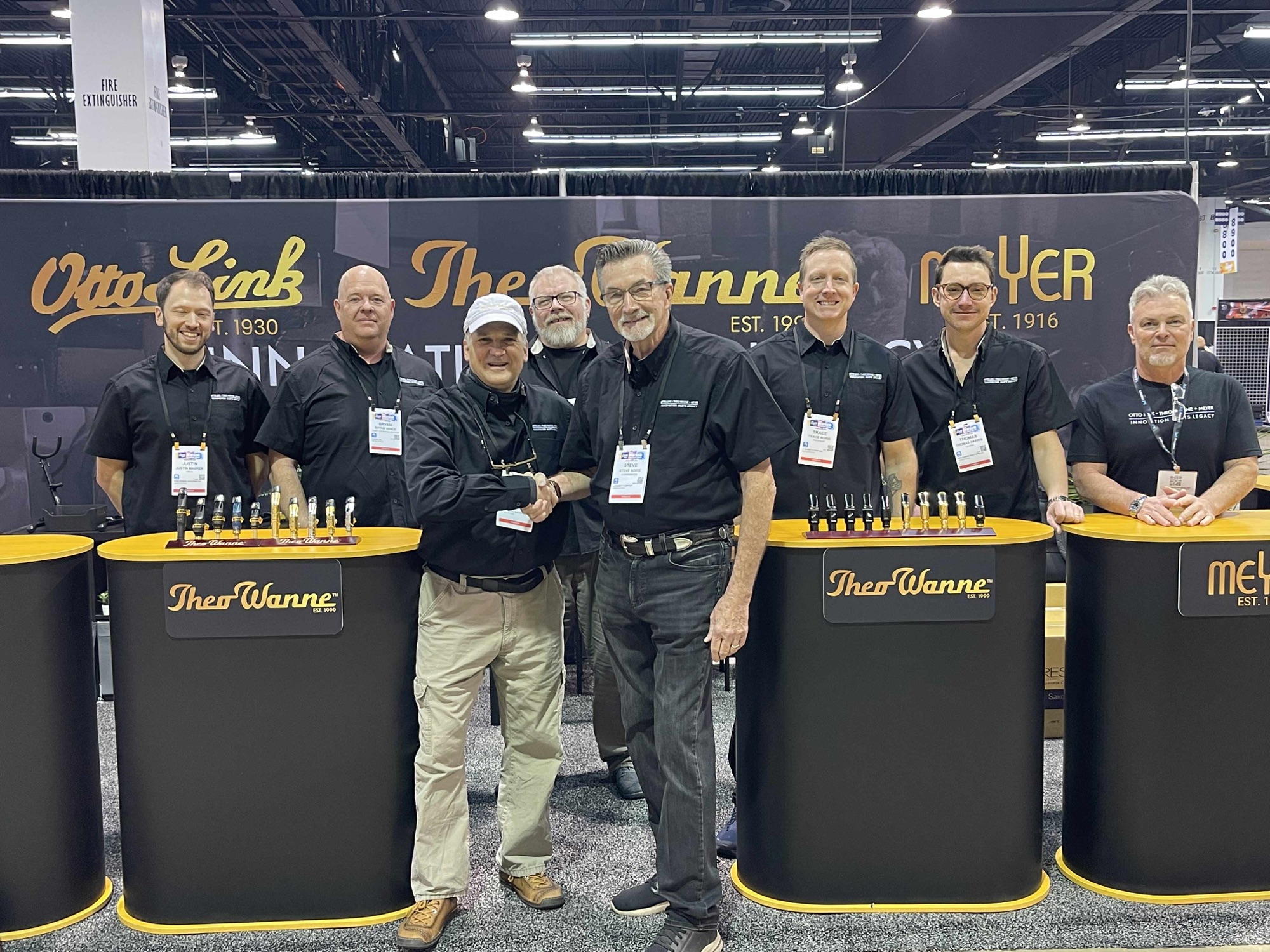
The saxophone world just got the kind of announcement that makes players sit up straight. Theo Wanne is now partnering with JJ Babbitt to manufacture Meyer and Otto Link mouthpieces. These are the designs that shaped the sound of jazz itself, and they’re about to be produced with a level of precision they’ve never had before.
What looked at first like a simple collaboration is actually something much bigger. Theo Wanne and JJ Babbitt have entered into a shared‑ownership, hybrid‑manufacturing partnership that fundamentally rethinks how these legendary mouthpieces are made.
The story began quietly. JJ Babbitt approached Theo Wanne to help develop a metal version of their LA mouthpiece. But once the two teams started working together, it became obvious that the potential went far beyond a single model.
The partnership expanded. The manufacturing approach evolved. And suddenly, the most iconic mouthpiece designs in history were on the table.
For decades, metal Otto Links were made using a two‑piece construction method. This process worked but came with limitations in consistency, alignment, and cost. This method is now gone.
Metal Links are now fully machined from solid bar stock, the same approach used for Theo Wanne’s own high‑end pieces. This shift brings major benefits such as tighter tolerances, perfect symmetry and internal geometry, incredible consistency from piece to piece, and superior long‑term durability.
Once machined, the pieces are sent to Elkhart, the historic home of JJ Babbitt, for finishing and polishing. It’s a fusion of modern precision and traditional craftsmanship.
The hard‑rubber Meyer and Link models aren’t being redesigned; they’re being refined through a hybrid process that combines the strengths of both companies. JJ Babbitt continues to produce the original molded hard‑rubber blanks using their historic formulas and tooling. Those blanks are then sent to Theo Wanne’s facility, where the facing, baffle, and internal geometry are CNC‑machined to perfection.
This approach preserves everything players love about the classic Meyer and Link feel, the material, the core design, the tonal DNA, while eliminating the variability that has frustrated players in recent decades. It’s the same design, just finally made with 21st‑century precision.
The announcement included a pointed line: “Many others have tried to replicate these legendary designs . . . But there is now no substitute for the real thing.” That’s not just branding. It’s a statement of intent.
For years, the market has been filled with “Meyer‑style” and “Link‑inspired” pieces, some excellent, some not, but all fundamentally reverse‑engineered approximations. This partnership changes the landscape. It means the actual Meyer and Link designs, the molds, the geometry, the lineage, are now paired with the most advanced mouthpiece manufacturing technology in the world.
It’s rare to see a legacy brand open its doors and invite a modern engineering powerhouse inside. It’s even rarer to see that collaboration result in shared ownership and a complete rethinking of manufacturing methods.
This partnership respects the past without being trapped by it. It preserves the designs players love while finally giving them the precision they deserve. For students, professionals, and collectors alike, this could mark the beginning of a new era, one where “vintage sound” and “modern consistency” are no longer mutually exclusive.
If you found this essay interesting, please read: Theo Wanne’s Essential Mouthpiece Collection.
For a firsthand account of playing the new Otto Link Florida Tone Edge produced through this partnership, read THE PROMISE DELIVERED: Inside the Partnership That Rebuilt a Legend.
For a firsthand account of how the FL STM plays, read Checkmate: The New Otto Link FL STM.
A complete list of all Jazzocrat essays can be found here.